


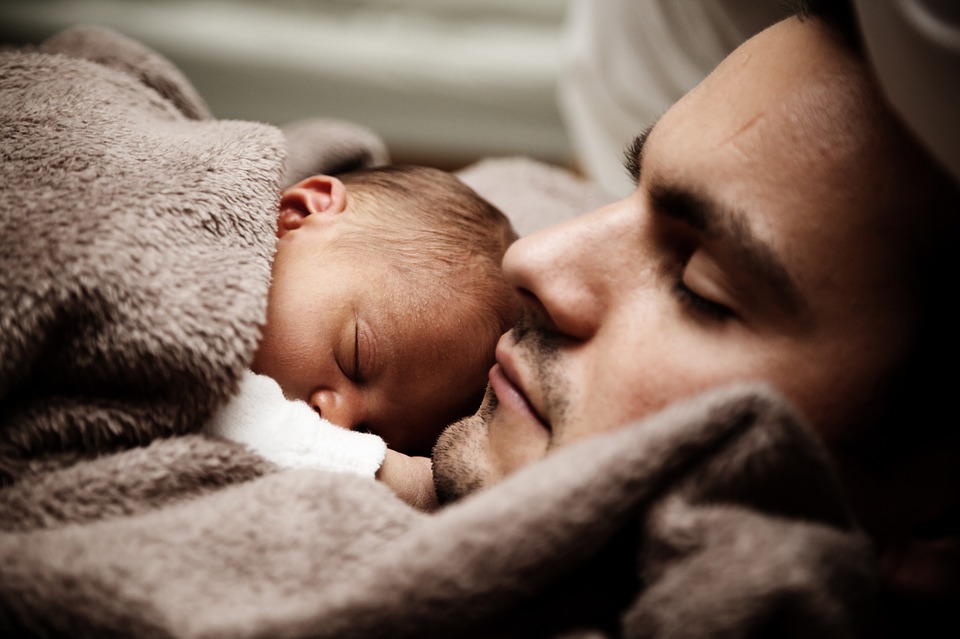
Lately, the topic of co-sleeping with children has come up in therapy sessions. Parents often share, with trepidation, that their child slept with them for an extended period of time. As a mental health professional, it is my training that has me telling parents that I recommend children to have their own bed, bedroom and space that they feel safe in that is separate from their parents.
1. Babies need to learn to self-soothe
When children sleep in their own rooms, they learn how to self-soothe. Being afraid of the dark is a very common fear that children have. By sleeping in a room by themselves, without the comfort of a parent, they learn how to overcome their fears. And by learning to overcome the fear of the dark, sleeping alone, monsters or whatever they have constructed about their room, they will translate those skills into overcoming other fears in their lives. It teaches children the independence they really do need in life.
2. Adults need time for connection
When parents and children sleep in the same bed every night, it can create a lack of time for connection between spouses. When doing couples work, I often recommend to clients to use bedroom as a way to reconnect, such as saying a gratitude list, sharing about their day or engaging in physical intimacy (as simple as a hug or more intensely into sexual intercourse). By having a child in your bed, it potentially takes away time for the couple to connect. For single mothers out there, you can use that time to reconnect with yourself, without disruption.
3. Teaches families boundaries
Another concern is the lack of boundaries when the child sees the parent’s bedroom as his personal space too. Where do parents get to call their own? Where do the parents get to have privacy? Where does the child get to have privacy? Children do have a certain need for privacy, as well as adults. By creating the boundary of having separate rooms and beds, it creates a sense of self for everybody in the family.
Then there is the safety factor to consider. Co-sleeping with your child puts them at risk for suffocation. The American Academy of Pediatrics (AAP) and the US Consumer Product Safety Commission, say letting baby sleep in your bed is a SIDS (sudden infant death syndrome) risk. Recommendations from leading organizations is something to consider when making decisions for your family.
Whether your family co-sleeps together or not is a family decision that I recommend everyone involved talks about. My recommendation is to have some boundaries around sleep in general. And of course, there is the occasional nightmare or late-night Netflix movie session that will turn into everyone in the family sleeping in the same bed.
Resources:
http://www.webmd.com/parenting/features/getting-kids-to-sleep-in-their-own-beds
http://www.marchofdimes.org/baby/co-sleeping.aspx
http://kidshealth.org/en/parents/cosleeping.html

Amanda Patterson, LMHC, CAP , Mental Health Counselor of the Year by the Florida Mental Health Counseling Association, decided to become a therapist while attending Nova Southeastern University. She saw the need to help people achieve the life they wanted to live, while creating a life of her own. She completed her master’s in Mental Health Counseling and started a career in the juvenile justice arena. Amanda has been a therapist for ten years and has a private practice in Wellington, Florida, specializing in depression, anxiety, relationship issues, and substance abuse in teenagers and young adults. Amanda is a believer in holistic treatment and she practices veganism, meditation and yoga in her life. Find out more about her practice here.
To schedule an appointment, call or text Amanda at 954-378-5381 or email her at amanda@amandapattersonlmhc.

It’s natural for babies to be near their mothers. The Academy of Pediatrics recommends infants stay in the parents room for the first six months. This blog post is honestly opinion filled and not family friendly. Crying by Self soothing should never recommended for infants. Consistently Meeting the needs of your baby is impairative for secure attachment.